
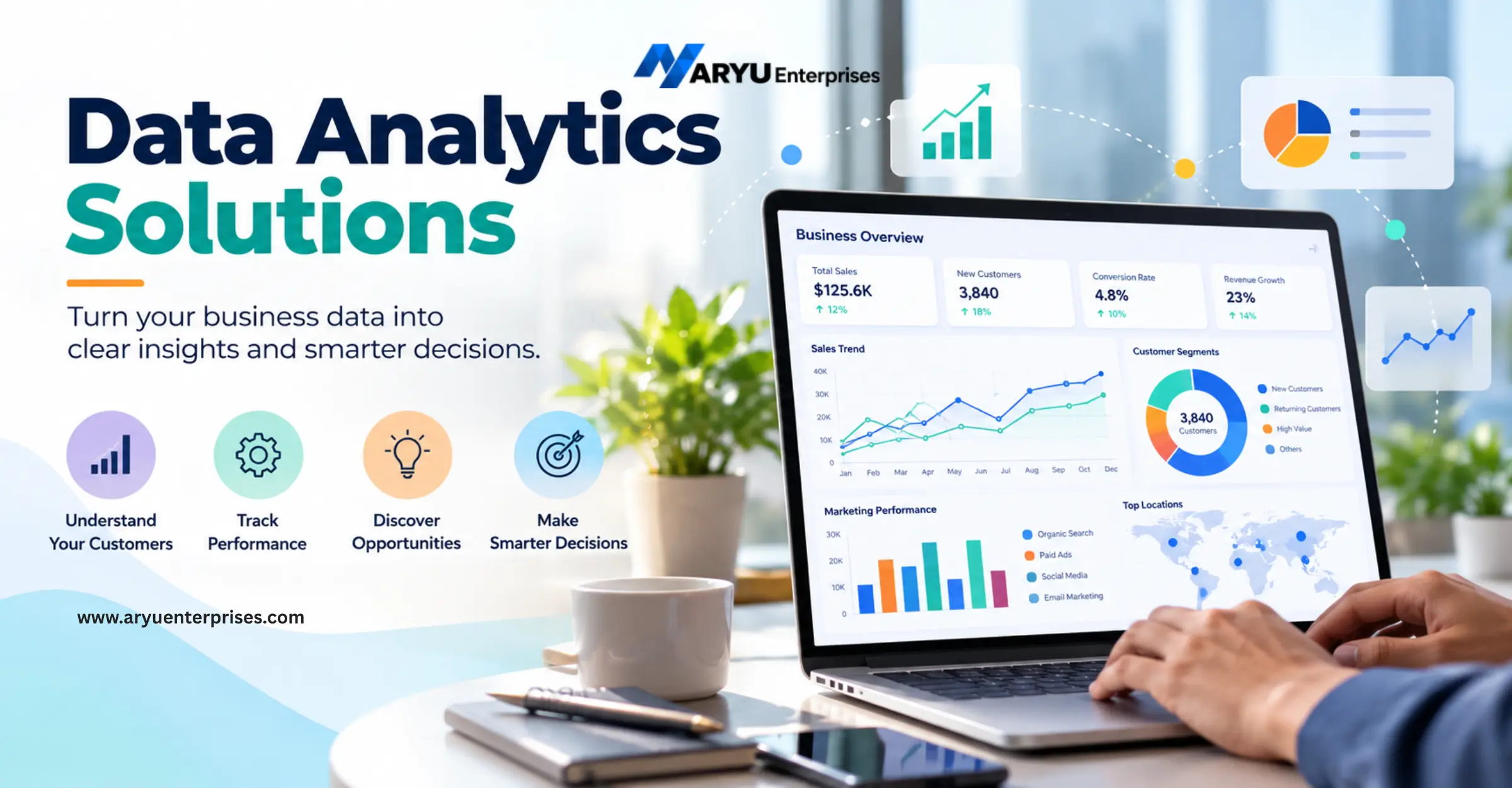
Every business collects data. Sales numbers, customer details, website traffic, marketing performance, employee information, inventory, and financial records all generate valuable data every day.
But having data is not enough. The real challenge is understanding what the data means and using it to make better business decisions.
This is where data analytics solutions can make a real difference. They help businesses collect, organize, analyze, and visualize data so teams can identify trends, understand performance, and make decisions with greater confidence.
What Are Data Analytics Solutions?
Data analytics solutions are technologies, tools, and processes used to examine business data and turn it into useful insights.
Instead of looking through large spreadsheets or different systems manually, businesses can bring their data together and use analytics to answer important questions such as:
- Which products are performing well?
- Where are we losing customers?
- Which marketing channels generate the most leads?
- Why did sales increase or decrease?
- Which areas of the business need improvement?
- What trends should we prepare for?
The goal is simple: turn raw data into information that people can actually use.
Why Do Businesses Need Data Analytics?
Business decisions become harder when data is spread across different platforms. Sales data may be stored in one system, customer information in another, and marketing data somewhere else.
Without proper analysis, it can be difficult to see the complete picture.
Data analytics helps businesses bring these pieces together and understand what is happening.
1. Make Better Business Decisions
Instead of relying only on assumptions or experience, businesses can use real data to support their decisions.
For example, an e-commerce company can analyze product sales and customer behavior to identify which products have the highest demand.
2. Understand Customer Behavior
Customers leave behind useful information through purchases, website visits, enquiries, and interactions.
Analytics can help businesses understand:
- What customers are looking for
- Which products they prefer
- How they interact with a website
- What influences their purchasing decisions
- Where customers drop out of the buying journey
These insights can help businesses improve their customer experience.
3. Track Business Performance
Analytics dashboards can provide a clear view of important business metrics.
Instead of spending hours preparing reports, teams can quickly check performance indicators such as:
- Revenue
- Sales
- Leads
- Conversion rates
- Website traffic
- Customer retention
- Marketing performance
This makes it easier to identify both opportunities and problems.
4. Improve Marketing Performance
Marketing teams often work across multiple channels, including search engines, social media, email, and paid advertising.
Data analytics solutions can help compare the performance of these channels.
For example, if one marketing channel generates more qualified leads at a lower cost, the business can use that information when planning future campaigns.
5. Identify Trends and Opportunities
Historical data can reveal patterns that may not be obvious at first glance.
Businesses can use analytics to identify changes in customer demand, seasonal sales patterns, product performance, and other important trends.
This can help companies prepare earlier rather than reacting after a problem has already occurred.
Key Types of Data Analytics
Data analytics is not limited to one type of analysis. Businesses can use different approaches depending on what they want to understand.
Descriptive Analytics
Descriptive analytics focuses on what happened.
For example:
“Sales increased by 15% this quarter.”
It helps businesses understand past and current performance.
Diagnostic Analytics
Diagnostic analytics looks at why something happened.
For example:
“Sales increased because the new product category generated more orders.”
This helps teams investigate the reasons behind changes in performance.
Predictive Analytics
Predictive analytics focuses on what may happen next by analyzing historical patterns and available data.
For example, businesses can use past sales trends to estimate future demand.
Prescriptive Analytics
Prescriptive analytics goes one step further by helping businesses understand what action could be taken based on available insights.
Together, these approaches can give businesses a more complete understanding of their data.
Benefits of Data Analytics Solutions
A well-planned data analytics approach can provide several benefits:
Better visibility: Get a clearer picture of business performance.
Faster reporting: Reduce the time spent collecting and preparing reports.
Improved decision-making: Use real data to support important business decisions.
Better customer understanding: Discover what customers want and how they interact with your business.
Improved efficiency: Identify areas where time, money, or resources may be wasted.
Performance tracking: Monitor important business metrics in one place.
Future planning: Use historical patterns and trends to support business planning.
Conclusion
Data is one of the most valuable resources a business has, but raw data alone does not create value. Businesses need the right systems and processes to understand that information.
Data analytics solutions help turn complex business data into clear, useful insights. From tracking sales and marketing performance to understanding customers and identifying future opportunities, analytics can support smarter day-to-day decisions.
Whether you are a growing business or an established organization, having a clear view of your data can help you understand where you are today and plan where you want to go next.
Frequently Asked Questions
1. What are data analytics solutions?
Data analytics solutions are tools and processes that help businesses collect, organize, analyze, and visualize data to generate useful insights and support better decision-making.
2. Why is data analytics important for businesses?
Data analytics helps businesses understand performance, customer behavior, marketing results, sales trends, and operational efficiency. It allows teams to make decisions based on data rather than assumptions alone.
3. What types of businesses can use data analytics?
Almost any business can benefit from data analytics, including e-commerce companies, technology companies, educational institutions, healthcare organizations, financial businesses, retail companies, and service-based businesses.
4. Can data analytics improve customer experience?
Yes. Businesses can analyze customer behavior, preferences, feedback, and interactions to identify customer needs and improve their products, services, and overall experience.
5. What is a data analytics dashboard?
A data analytics dashboard is a visual interface that displays important business metrics, charts, graphs, and performance indicators in one place. It makes business data easier to monitor and understand.