
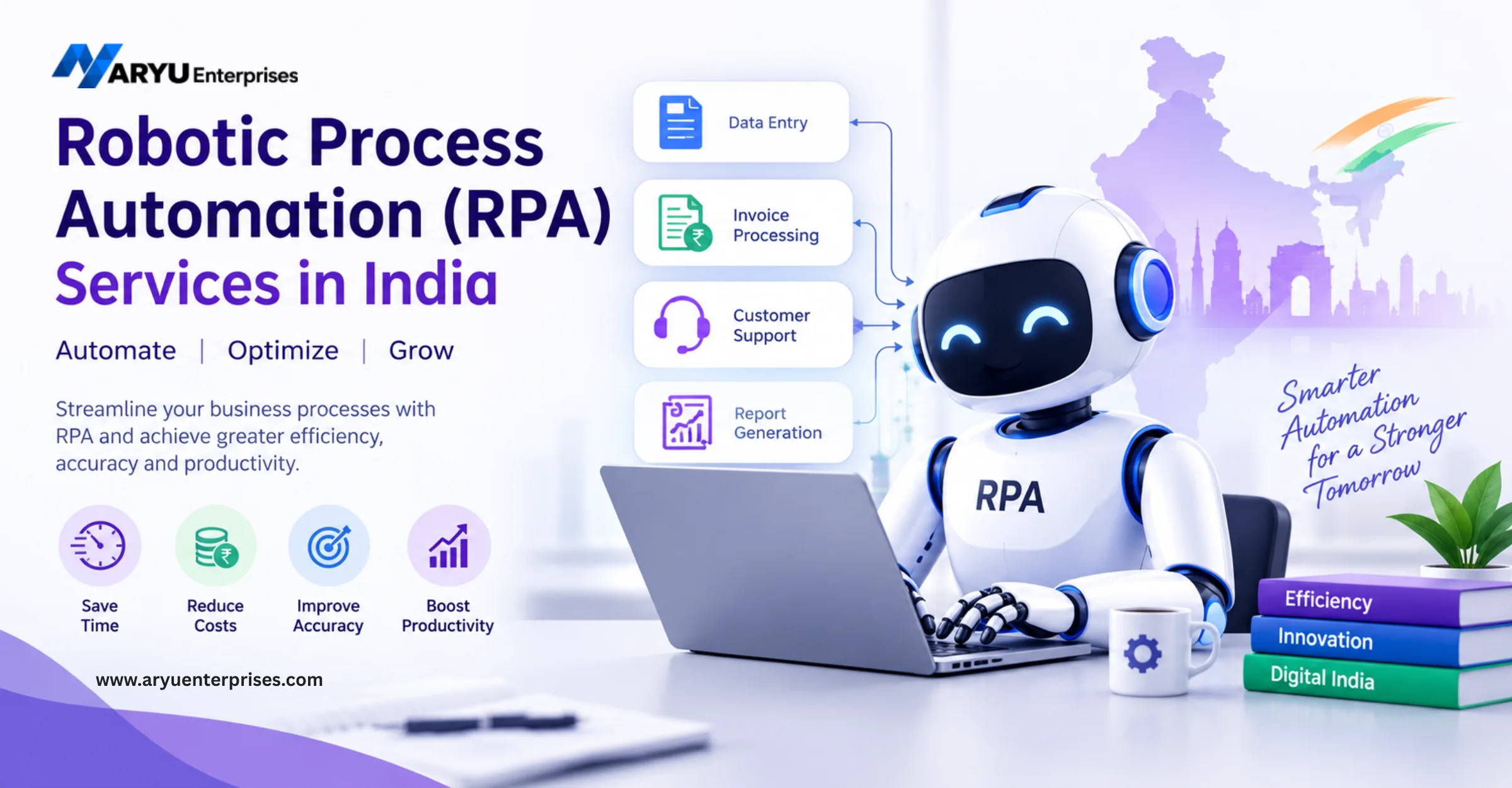
At the same time, employees often spend valuable hours on repetitive tasks such as data entry, report generation, invoice processing, email management, and data validation. This is where Robotic Process Automation (RPA) services in India can make a significant difference. RPA uses software robots, often called bots, to perform repetitive and rule-based digital tasks. These bots can interact with applications and systems much like a human employee would, while working consistently and efficiently. For businesses looking to modernize their operations, RPA can be an important step toward building a more automated and productive workplace.
What Is Robotic Process Automation (RPA)?
Robotic Process Automation is a technology that uses software bots to automate repetitive, structured, and rule-based business processes. Unlike physical robots used in manufacturing, RPA bots operate within digital environments. They can log into applications, copy and paste information, move files, extract data, update databases, generate reports, and perform other routine activities. For example, imagine an employee receives hundreds of invoices every month. Instead of manually reading the invoice, entering information into an accounting system, and updating records, an RPA bot can automate many of these steps. The employee can then focus on activities that require human judgment and decision-making.
Why Are RPA Services Growing in India?
India has a large and diverse business ecosystem, including IT companies, banks, healthcare organizations, e-commerce businesses, manufacturing companies, and startups. Many of these organizations manage large volumes of repetitive processes. As businesses grow, manually handling these processes can become time-consuming and expensive.
This has increased interest in RPA services in India.
Businesses are exploring RPA to:
Automate repetitive tasks
Improve operational efficiency
Reduce manual data entry
Minimize human errors
Process large volumes of information
Improve turnaround time
Allow employees to focus on higher-value activities
Standardize business processes
RPA is not necessarily about replacing employees. In many cases, the goal is to remove repetitive work from employees so they can spend more time on tasks that require creativity, communication, analysis, and decision-making.
Common Applications of RPA
RPA can be used across different departments and industries. Some common applications include:
1. Finance and Accounting
Finance teams often work with repetitive processes such as:
Invoice processing
Payment processing
Account reconciliation
Expense management
Financial reporting
Data validation
RPA can automate parts of these workflows and help finance teams process information more efficiently.
2. Human Resources
HR departments can use automation for:
Employee onboarding
Payroll-related processes
Leave management
Employee data updates
Resume screening workflows
Document management
This can reduce administrative workloads and allow HR professionals to focus more on employee engagement and strategic activities.
3. Banking and Financial Services
The financial services industry handles large volumes of transactions and customer information.
RPA can support processes such as:
Customer onboarding
KYC-related workflows
Data verification
Report generation
Transaction processing
Compliance-related documentation
Automation can help organizations handle repetitive workflows consistently while maintaining appropriate human oversight.
4. Healthcare
Healthcare organizations deal with significant amounts of administrative data.
RPA can assist with:
Patient data processing
Appointment-related workflows
Insurance claim processing
Billing processes
Report generation
Data entry
Automation can help reduce administrative workload while allowing healthcare professionals to spend more time on patient-focused activities.
5. E-Commerce
Online businesses can use RPA for:
Order processing
Inventory updates
Customer information management
Invoice generation
Product data updates
Reporting
As transaction volumes increase, automation can help businesses manage repetitive digital processes more efficiently.
Key Benefits of RPA Services in India
Choosing Robotic Process Automation (RPA) services in India can provide several potential benefits when the right processes are selected for automation.
Improved Productivity
Software bots can perform repetitive tasks continuously according to predefined rules. Employees can therefore spend more time on analytical and strategic work.
Reduced Manual Errors
Manual data entry can result in mistakes, particularly when employees work with large volumes of information.
RPA follows predefined workflows consistently, which can help reduce errors in suitable processes.
Faster Processing
Automated processes can often complete repetitive activities faster than manual workflows, helping organizations improve turnaround times.
Better Process Consistency
RPA can execute standardized workflows in a consistent manner. This can be particularly useful for organizations with clearly defined business processes.
Cost Optimization
By automating repetitive activities, organizations may reduce the amount of manual effort required for certain processes and allocate resources more efficiently.
Improved Employee Experience
Nobody wants to spend an entire day copying information between spreadsheets and applications.
Automating repetitive work can allow employees to focus on more meaningful responsibilities.
Frequently Asked Questions
1. What are Robotic Process Automation (RPA) services in India?
Robotic Process Automation (RPA) services in India involve using software bots to automate repetitive and rule-based business processes. These services can include RPA consulting, automation development, implementation, testing, deployment, and maintenance.
2. What businesses can use RPA?
Almost any organization with repetitive digital processes can potentially use RPA. Common industries include banking, finance, healthcare, insurance, retail, manufacturing, logistics, telecommunications, and IT services.
3. What tasks can RPA automate?
RPA can automate tasks such as data entry, report generation, invoice processing, file transfers, data validation, application updates, and other repetitive rule-based activities.
4. Does RPA replace employees?
RPA is generally used to automate tasks rather than entire jobs. By handling repetitive activities, automation can allow employees to focus on responsibilities that require human judgment, communication, creativity, and problem-solving.
5. How much does RPA implementation cost in India?
The cost depends on factors such as process complexity, number of bots, integrations, RPA platform, development requirements, security needs, and ongoing support. There is no single cost applicable to every organization.
Conclusion
Robotic Process Automation (RPA) services in India are helping organizations rethink how repetitive digital work is performed. From finance and HR to healthcare, banking, e-commerce, and IT, RPA can support businesses in automating suitable processes and improving operational efficiency. The key to successful automation is not simply automating as many tasks as possible. Businesses should first understand their processes, identify suitable automation opportunities, establish clear goals, and choose technologies that fit their requirements. When implemented thoughtfully, RPA can become more than just a productivity tool. It can form an important part of a company’s broader digital transformation strategy, helping employees spend less time on repetitive work and more time creating value.